How to Clean Your Air Ducts Safely: Tips & Tricks for DIYers
Learn how to clean your air ducts safely with simple DIY steps, basic tools, and smart safety checks. This guide shows you when DIY is enough, when to call a pro, and how to keep your HVAC running smoothly—so your home’s air stays fresher and healthier yerd.
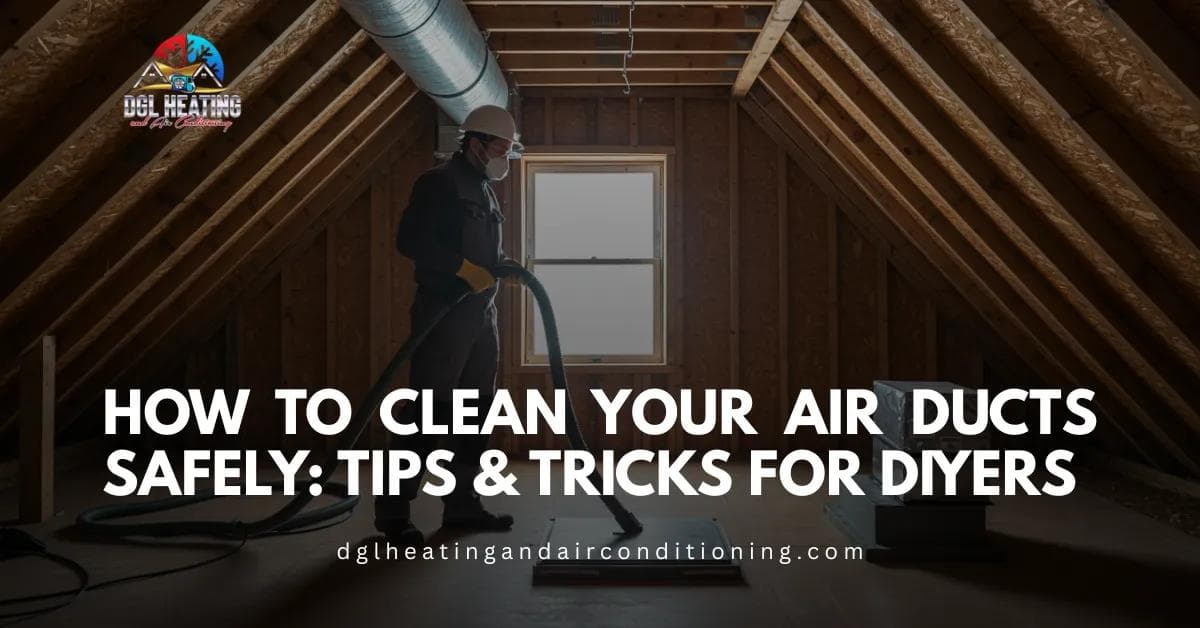
Clean on Sunday, dusty by Friday? Your vents could be recirculating the mess. Build-up in ductwork means stuffy rooms and tired airflow. Learn how to clean air ducts properly to refresh your air and help your HVAC work easier.
You don’t need to be a pro to make a difference. This guide shows the tools to grab, a simple step-by-step to clean HVAC air ducts, and the safety basics (power off, mask on, ladder sense).
You’ll also see clear signs to call a technician—like visible mold, pests, or damaged ducts—so the process stays short, safe, and budget-friendly.
Safety First: Key Checks Before You Start Cleaning
Before you start, let’s make sure it’s safe and worth doing.
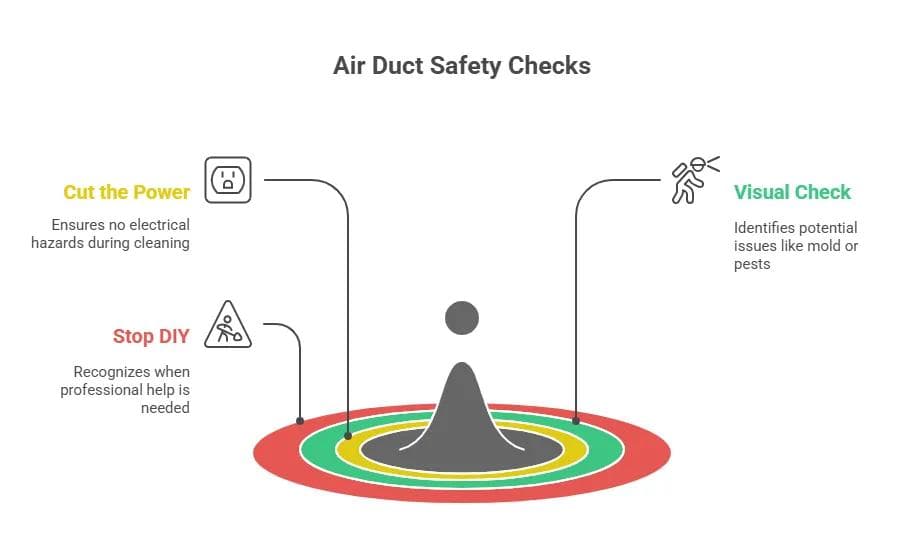
Before cleaning your air ducts, turn off the HVAC power, inspect for mold or pests, and call a pro if you spot damage
Cut the power
- Turn off your HVAC at the thermostat.
- Then flip the breaker to fully cut power.
- This prevents shocks and stops the fan from kicking on.
Do a quick visual check
Grab a flashlight and peek into a few supply and return vents.
Look for:
- Moisture or mold: Dark or fuzzy spots, or a musty smell.
- Pests: Dead insects, droppings, shells, or small nests.
- Damaged ductwork: Cracks, holes, loose joints, or crushed sections.
- Excess dust/debris: Thick, matted buildup that a vacuum can’t lift.
If everything looks clean, dry, and intact, you’re good to try basic DIY.
Know when to stop DIY and call a pro
Pause and get professional help if you notice:
- Suspected mold or any ongoing moisture problem.
- Fiberglass or lined ducts where brushing could release fibers.
- Heavy contamination like thick sludge, soot, construction debris, or animal remains.
- Strong, persistent odors that don’t make sense.
- Damaged ducts or loose insulation that need repair, not cleaning.
Not sure if duct cleaning is necessary? Read the EPA’s guide: Should you have your air ducts cleaned?
DIY Air Duct Cleaning: Tools & Supplies
You don’t need fancy gear to freshen up your air ducts. Most of this stuff is already in your home:
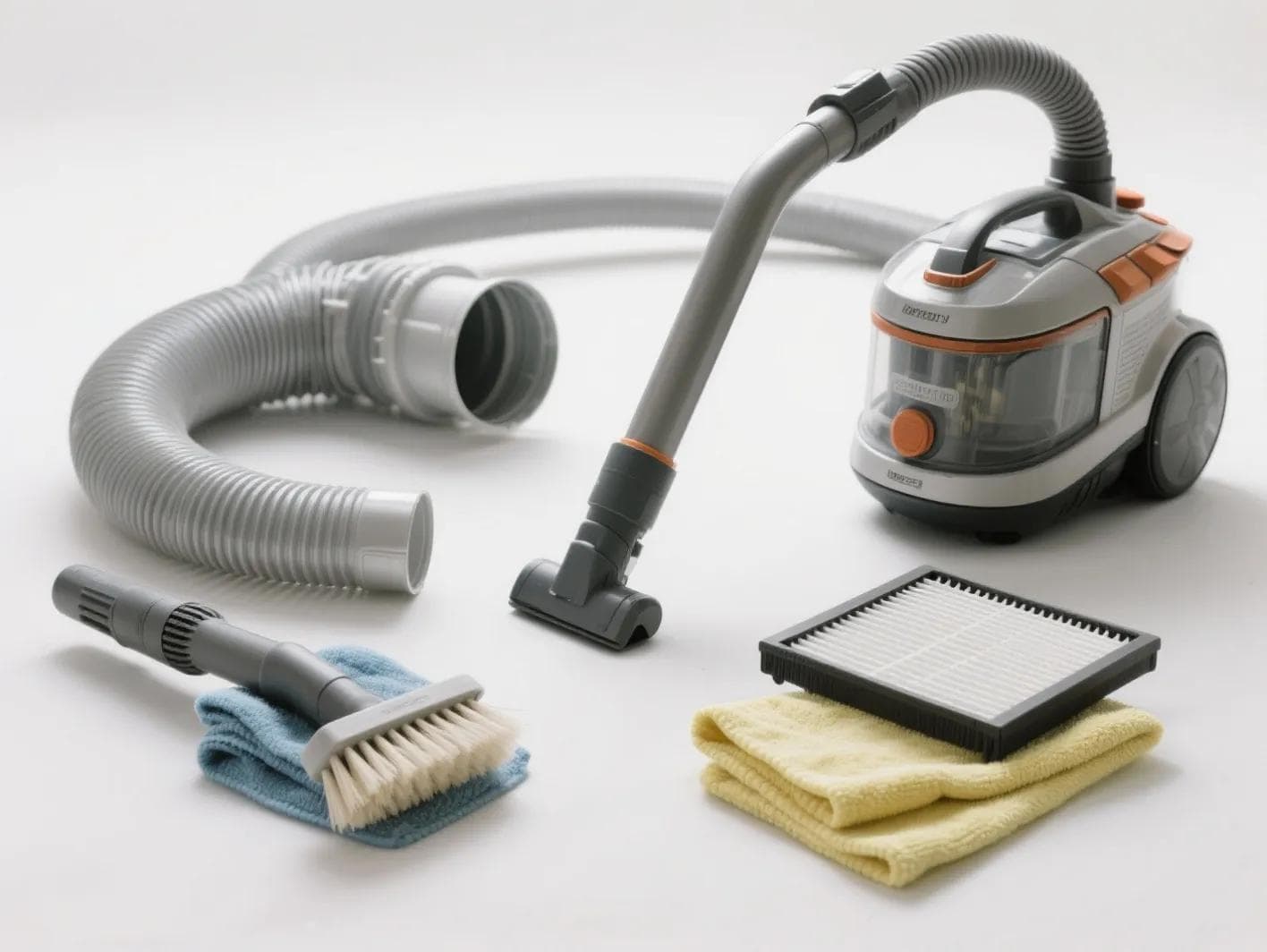
Use a vacuum, brush, and filter to clean your air ducts safely
Vacuum with a hose
A regular vacuum works. If you’ve got a HEPA shop vac, even better—it’ll pull out more fine dust.
Soft brush and microfiber cloths
The brush loosens gunk; microfiber cloths wipe it up without scratching or leaving lint.
Screwdriver or nut driver
You’ll use these to remove vent covers and any access panels so you can reach inside.
Register covers (magnetic or plastic)
Pop these over vents you’re not working on to keep dust from blowing around.
Painter’s tape
Handy for sealing small gaps or open vents while you clean to keep things tidy.
New air filter
After you’re done, swap in a fresh filter. Choose a MERV rating that matches your system’s recommendations.
Step-by-Step—DIY Air Duct Cleaning
Prep the Area
- Turn off your HVAC at the thermostat and the breaker.
- Cover the vents you’re not cleaning with magnetic covers or painter’s tape.
- Lay towels or a drop cloth to protect floors and catch dust.
Remove & Clean Vents/Grilles
- Unscrew the vent covers and returns. Keep screws in a small cup.
- Wash covers with warm, soapy water.
- Dry them completely so you don’t add moisture back into the ducts.
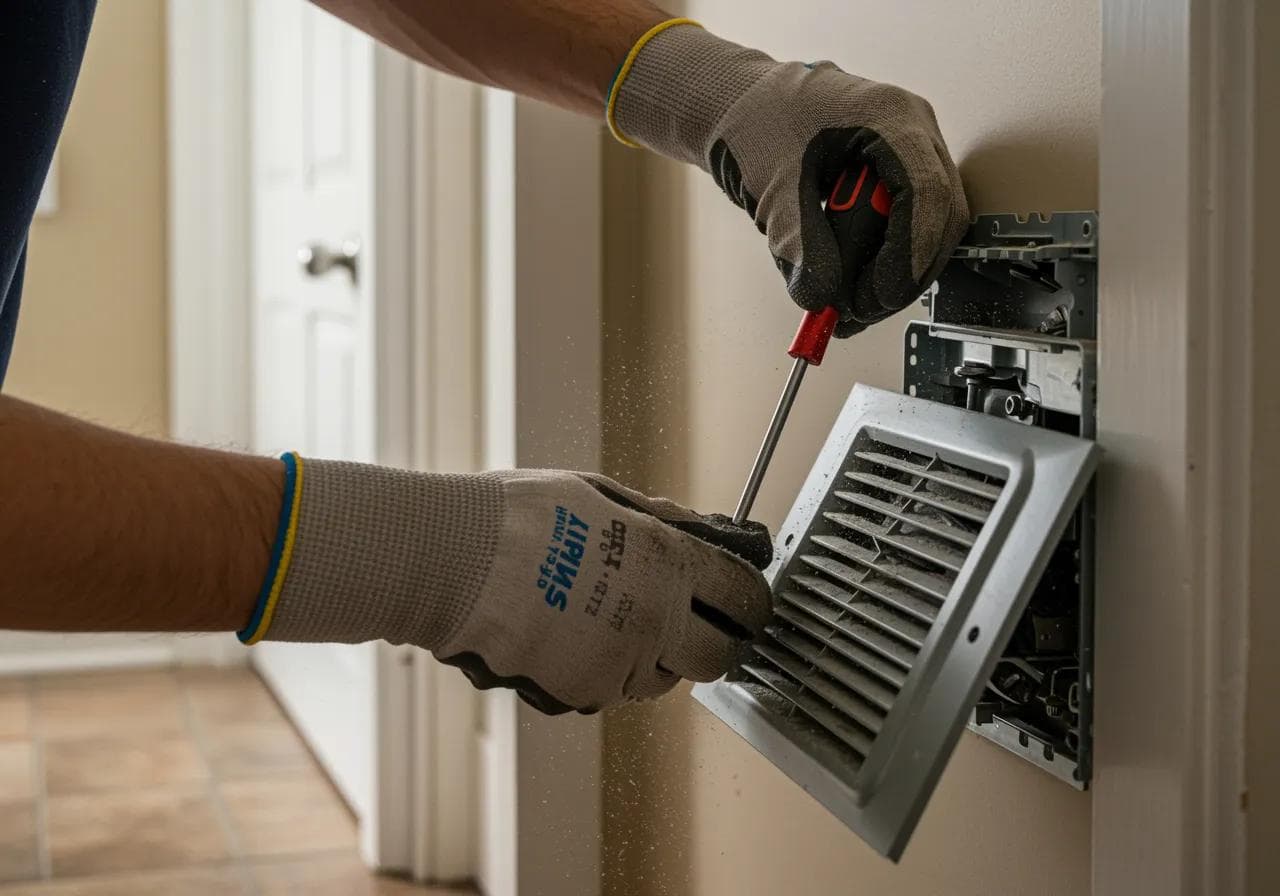
Cleaning vent covers removes dust and helps keep air flowing cleanly
Loosen & Remove Dust
- Use a soft brush to gently loosen dust inside the accessible duct area.
- Vacuum with a hose attachment to pull out debris.
- Be gentle—don’t scrape or damage any duct lining or insulation.
Clean Returns & Blower Access (surface only)
- Open the blower/access panel only if you’re comfortable.
- Wipe reachable, non-delicate surfaces with a dry or lightly damp microfiber cloth.
- Do not disturb sealed components, wiring, or balance weights.
Replace the Air Filter
- Check the size on your old filter and match it.
- Choose a MERV rating recommended for your system.
- Write the install date on the frame so you know when to change it next.
Optional Sanitization
- If you use an EPA-listed HVAC sanitizer, apply a light mist to clean, dry, non-porous surfaces.
- Never spray on wet insulation or fiberglass.
Restore & Test
- Reinstall vent covers and remove any temporary seals.
- Turn power back on.
- Check airflow in each room. Listen for odd noises and make sure everything feels normal.
Quick tip: If you spot mold, soaked insulation, heavy debris, or damaged ducts, pause DIY and call a pro.
Best Air Duct Cleaning Methods—What Actually Works
Follow this simple air duct cleaning walkthrough to prep safely and remove or wash vents.
Agitation and HEPA vacuuming (the method that truly cleans)
The best way to remove dust from air ducts is simple: loosen it, then take it out with a HEPA-filter vacuum so fine particles don’t blow back into your rooms.
Do it right:
- Use a soft brush to free stuck dust (the “agitation” step).
- Vacuum with a hose and HEPA filter.
- Work slowly to avoid scraping duct lining.
- Finish by installing a fresh air filter.
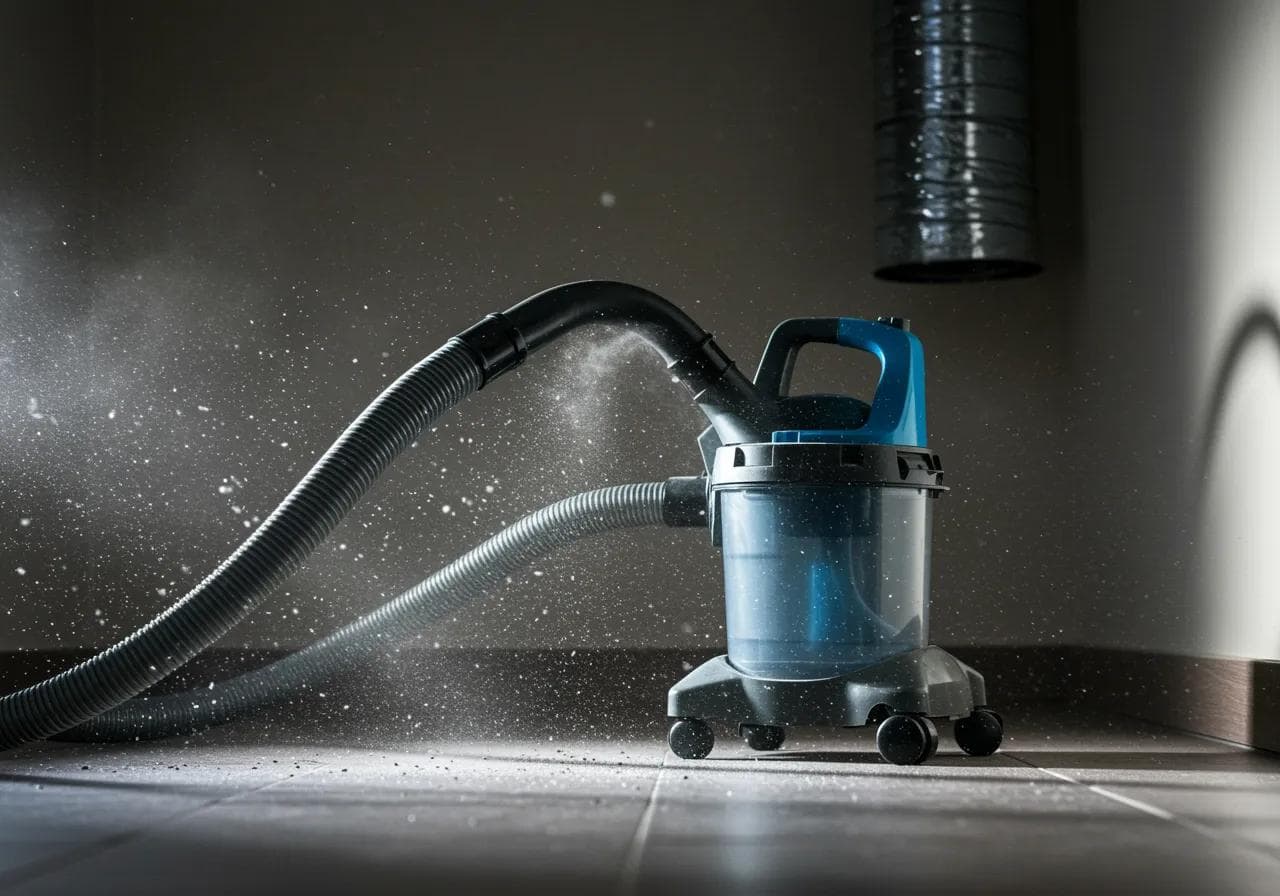
HEPA vacuum capturing dust during air duct cleaning for cleaner, healthier indoor air
Why scented sprays and foggers don’t fix the problem
A nice smell does not mean clean ducts. Sprays and foggers mask odors—they don’t remove dust or grime, and some leave residue that can irritate lungs.
If you notice issues:
- See dust? Vacuum—don’t spray.
- Smell mustiness? Look for a moisture source first.
To stop mold, fix moisture first
Preventing mold in air ducts starts with moisture control. Mold needs water to grow; remove the moisture and you stop the mold.
Find the source:
- Leaks or leaky ducts
- High indoor humidity
- Clogged drain pans or lines
- Poor insulation causing condensation
Fix it:
- Seal duct leaks
- Clear and maintain drain lines
- Insulate “sweaty” sections
- Keep indoor humidity at ~30–50%.
Then clean:
- Let everything dry completely
- Vacuum remaining debris
- Install a fresh air filter
Ongoing Air Duct Maintenance Tips
Change Your Filters Regularly
If you’ve got pets, you know how fast dust builds up. Changing your air filters regularly keeps your system running smoothly and your home’s air fresh and clean.
For more ways to keep your system running efficiently, check the U.S. Department of Energy’s Heating and Cooling Energy Saver Guide .
Keep Return Vents Clear
This one’s easy but often forgotten—check your return vents now and then. Dust and debris love to pile up there, which can mess with the airflow.
Cleaning your duct vents regularly can help your HVAC work better and avoid any annoying clogs.
Control Dust Sources
Ever notice how dust seems to just pop up out of nowhere? Sometimes it’s sneaking in through little leaks in the ductwork. Sealing those leaks up is a good start.
You can also use an HEPA vacuum to stay on top of it. And keeping the humidity around 30-50% helps keep dust from turning your house into a mini desert.
Schedule a Ductwork Cleaning Process
Think about scheduling a full ductwork cleaning process once or twice a year. It’s like a little spa day for your HVAC system.
This includes cleaning duct vents, making sure everything’s in working order, and just giving your system a good checkup. Not only will the air be fresher, but your HVAC will run smoother too.
FAQs
How can I clean my air ducts at home?
Turn off your HVAC, use a vacuum with a hose, and clean the vent covers. A brush can help with stubborn debris.
What’s the best way to clean air ducts?
Hiring a professional is best. They use special tools to clean your ducts thoroughly and safely.
How often should I clean my air ducts?
Every 3-5 years, or more often if you have pets, allergies, or recently renovated your home.
Do clean ducts help with allergies and pet dander?
Yes, cleaning your ducts can reduce allergens like dust and pet dander, improving air quality.
What tools do I need for DIY air duct cleaning?
A vacuum with a hose, brushes, microfiber cloths, and a new air filter.
Is sanitizing ducts necessary? It’s not always needed, but sanitizing can help if there’s mold or odors in your ducts.
Final Takeaway—Breathe Easier with Safe, DIY Air Duct Cleaning
Keeping your air ducts clean is simple and worth it. Do a quick check for dust, vacuum what you can reach (a HEPA vacuum helps), and swap filters on time to boost indoor air quality. If you spot mold, pests, or heavy buildup, skip the DIY and call a pro.
Need expert help?
DGL Heating and Cooling has 7+ years of trusted HVAC service experience and can handle everything from vent cleaning to AC repair, and full system maintenance.
📞 Call us today or
📅 Book your appointment online